


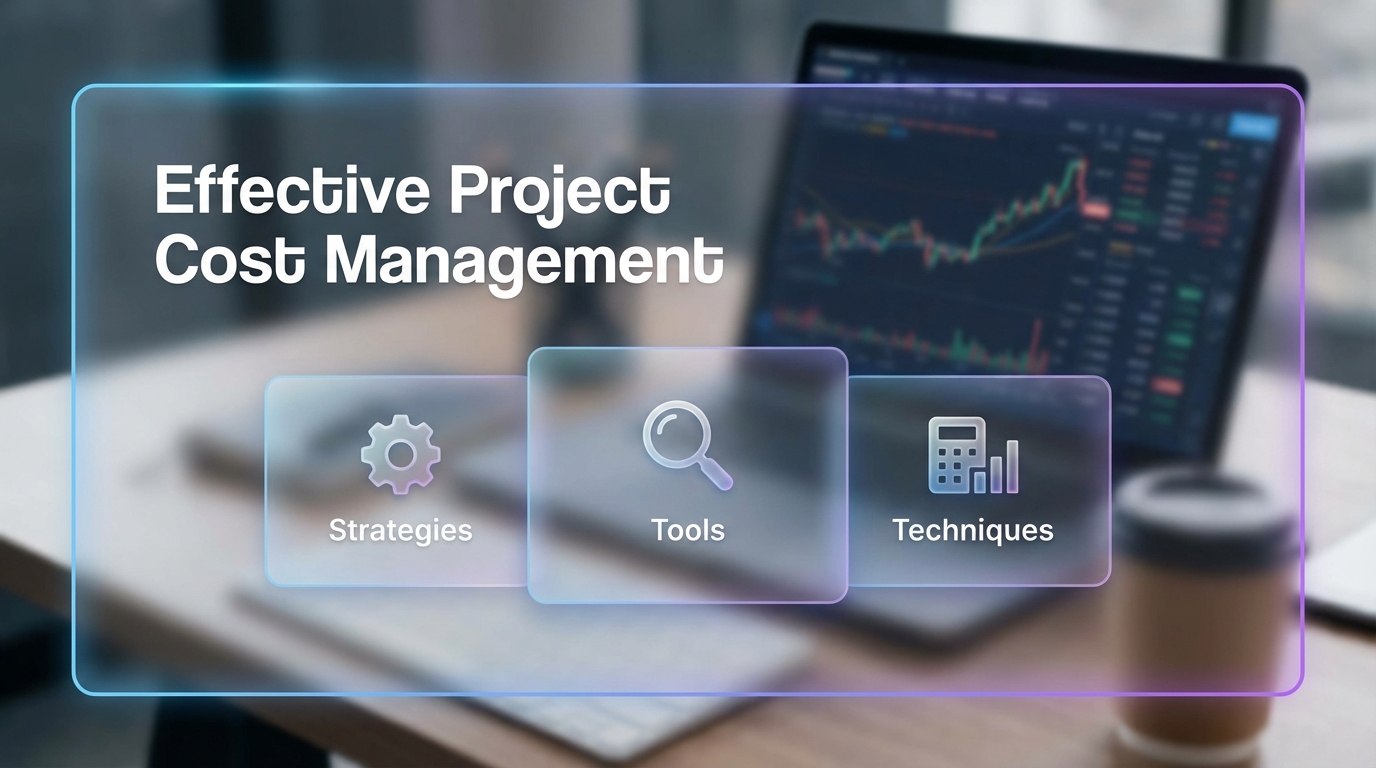
The Project Cost Manager: The Financial Guardian of Your Success
Introduction: Why Every Project Needs a Financial Guardian
Imagine building a house without tracking the budget—you might run out of funds before the roof is installed. In the business world, this financial chaos is prevented by a crucial professional: the Project Cost Manager. This individual acts as the financial guardian of a project, meticulously planning, monitoring, and controlling expenses to ensure the venture is completed within the approved budget. Their role is fundamentally about balancing the triple constraints of time, scope, and cost. Without this oversight, even the most brilliant projects can fail, drowning in unforeseen expenses. Therefore, understanding this position is essential for anyone involved in delivering successful outcomes.
Project cost manager

The Core Responsibilities of a Project cost manager
Building the Financial Blueprint
The journey begins long before any physical work starts. A Cost Manager develops the initial cost estimate, which serves as the project’s financial blueprint. This process involves analyzing labor rates, material costs, and equipment needs. Furthermore, they create a detailed budget that allocates funds to every phase of the project lifecycle. This meticulous planning helps stakeholders visualize the financial commitment required. Consequently, it prevents the common pitfall of starting a project with an unrealistic financial outlook. Ultimately, this initial groundwork sets the stage for informed decision-making.
Tracking Expenses in Real-Time
Once the project is underway, the focus shifts to monitoring. The Cost Manager continuously tracks actual spending against the planned budget. They utilize specialized software to capture every transaction, from small supply purchases to major contractor payments. By doing so, they can quickly identify variances where costs are exceeding projections. This vigilance allows for immediate corrective actions, such as renegotiating supplier contracts. Accordingly, this real-time oversight prevents minor budget overruns from escalating into financial disasters. Indeed, their constant attention ensures the project remains on a stable financial footing.
The Immense Benefits of Project cost manager
Preventing Financial Surprises
The primary advantage of having a skilled Cost Manager is the elimination of financial surprises. They forecast potential future costs and cash flow needs with remarkable accuracy. Moreover, they conduct risk assessments to identify areas where unexpected expenses might arise. This proactive approach allows the project team to set aside contingency funds wisely. Consequently, when a challenge does appear, the project has a financial cushion to absorb the shock. As a result, the entire operation runs more smoothly and with greater confidence.
Driving Better Decision-Making
Beyond just tracking numbers, Cost Managers provide invaluable insights that guide strategic choices. They generate regular reports that illustrate the financial health of the project in simple terms. Project leaders use this data to decide whether to accelerate certain tasks or delay others. In addition, this information is vital for negotiating with clients and vendors from a position of strength. Therefore, the Cost Manager becomes a key advisor, not just a bookkeeper. Their analysis directly empowers leaders to make smarter, more profitable decisions.
Conclusion: The Indispensable Role
In conclusion, the Project Cost Manager is far more than a number-cruncher; they are a strategic partner essential for success. Their expertise ensures that projects are delivered on time and within budget, protecting the company’s bottom line. By providing clarity and control over finances, they enable teams to focus on their core tasks without financial worry. Moreover, they build trust with stakeholders through transparent and accurate reporting. Ultimately, investing in professional cost management is an investment in the project’s viability and profitability. Therefore, every ambitious project truly needs this dedicated guardian of its financial future.
Reference
· Anthony, R. N., & Govindarajan, V. (2007). Management Control Systems (12th ed.). McGraw-Hill/Irwin.
· Anthony, R. N., & Hekimian, J. S. (1967). Operations cost control. R.D. Irwin.
· Bentley, T. J. (1980). Making cost control work: How managers can cut waste & improve performance. Prentice-Hall.
· Goh, J., & Hall, N. G. (2013). Total Cost Control in Project Management via Satisficing. Management Science, 59(6), 1354–1372.
· Hansen, D. R., & Mowen, M. M. (2003). Cost management: accounting and control (4th ed.). Thomson/South-Western.
· Hansen, D. R., & Mowen, M. M. (2006). Cost management: Accounting and control (5th ed.). Thomson/South-Western.
#Effective #Project #Cost #Management #Strategies #Tools #Techniques #Successful #Budget #Control #Financial #Performance
Related: Unlocking Growth: How the Right CRM Software Can Transform Customer Relationships and Drive Business Success, Building Loyalty and Driving Revenue: How Strategic Customer Relationship Management Can Transform Your Business, CRM Systems: Boosting Customer Relationships, Streamlining Sales, and Driving Business Growth in the Modern Era