


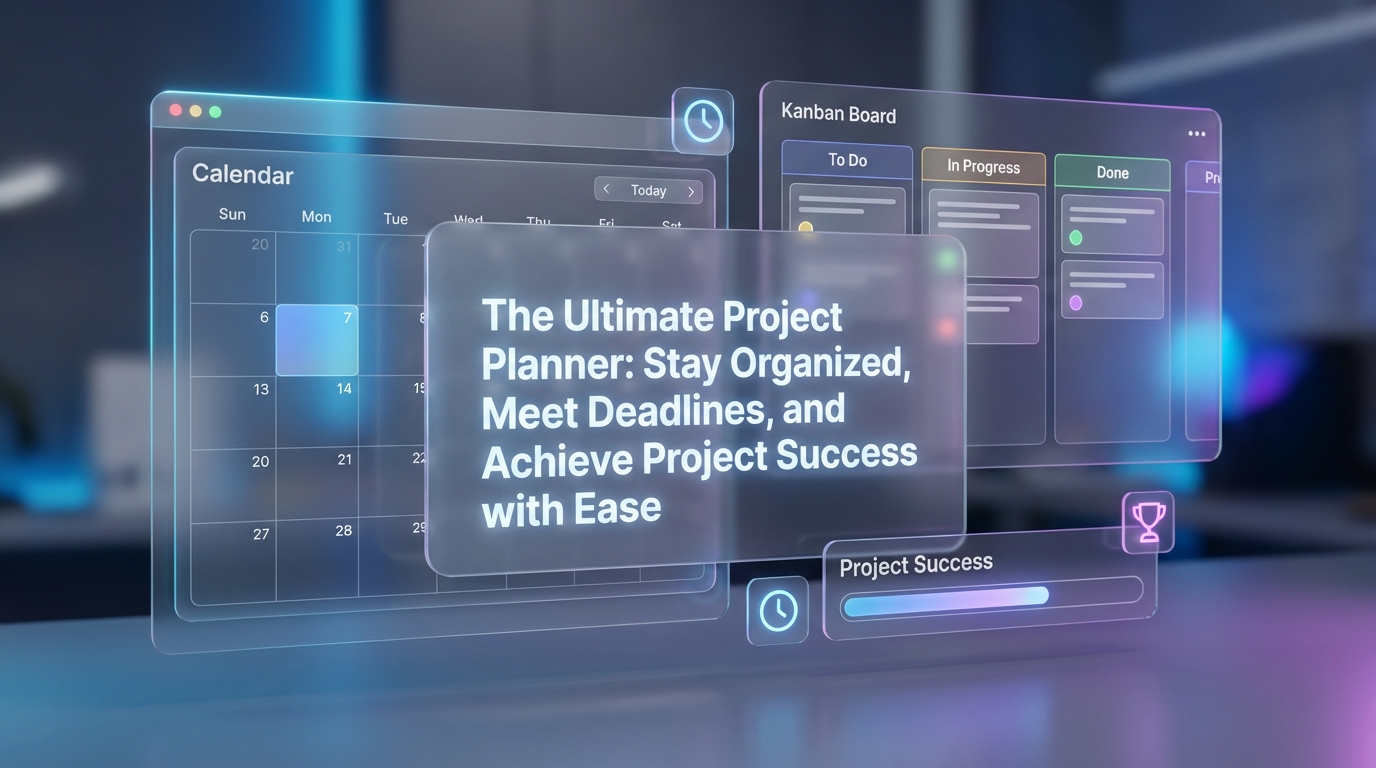
The Project Calendar: Your Blueprint for On-Time Delivery
Introduction
Imagine embarking on a journey without a map or a clear timeline for arrival. Consequently, confusion and delays would likely plague the entire trip. Similarly, in the professional world, managing a project without a structured timeline invites chaos. This is precisely where a project calendar becomes an indispensable tool. Fundamentally, it serves as the central nervous system for your project’s schedule. Moreover, it transforms abstract goals into concrete, actionable steps. It provides a shared visual representation of the project’s life cycle. Therefore, every stakeholder can easily understand what needs to happen and when. This simple yet powerful document aligns teams, manages expectations, and ultimately paves the way for successful project completion.
Project calendar
Project calendar

The Importance of a Structured Project calendar
Why Every Project Needs a Central Schedule
First and foremost, a project calendar establishes a single source of truth for all timing-related queries. Without it, team members might rely on outdated emails or their own assumptions. Consequently, miscommunication and conflicting priorities can quickly derail progress. A centralized schedule, in contrast, ensures everyone operates from the same page. Furthermore, it explicitly outlines task dependencies, revealing which activities must precede others. For instance, you cannot begin testing a feature before its development is finished. This clarity prevents bottlenecks and keeps the workflow smooth. Additionally, it acts as a powerful communication tool with clients and executives. By sharing the calendar, you transparently demonstrate how their requests impact the established timeline. Ultimately, this builds trust and fosters stronger professional relationships.
Key Benefits of Implementing a Project Calendar
Enhancing Team Coordination and Focus
When duties and deadlines are clearly visible, team coordination improves dramatically. Each member can see their responsibilities in the context of the larger effort. Consequently, this visibility reduces the need for constant check-in meetings. People simply refer to the calendar for updates on task statuses. Moreover, it aids in resource allocation, ensuring no one is overburdened at peak times. A well-maintained schedule also helps in identifying potential resource conflicts early. Therefore, managers can proactively adjust assignments to maintain balance. This organized approach keeps the team focused and motivated, as progress is visually tracked.
Proactive Risk Management and Problem Solving using Project calendar
A dynamic project calendar is not merely a static document; it is a proactive risk management tool. By plotting every milestone, you can easily spot potential delays before they occur. For example, if a critical task is falling behind, the calendar highlights its ripple effect on subsequent phases. Consequently, the team can convene to develop a mitigation strategy immediately. This early warning system is far more effective than reacting to crises after they have happened. It also allows for realistic adjustments to deadlines and expectations. As a result, stakeholders remain informed and surprises are minimized. Therefore, the calendar contributes directly to a project’s resilience and adaptability.
Conclusion
In conclusion, a well-defined project calendar is far more than a simple list of dates. Instead, it is a comprehensive blueprint for success, guiding teams from initiation to closure. Its importance lies in its ability to unify efforts, enhance communication, and mitigate risks proactively. By adopting this essential tool, organizations can significantly increase their likelihood of delivering projects on time and within budget. Consequently, the project calendar stands as a fundamental pillar of effective and professional project management.
Reference
· Anthony, R. N., & Govindarajan, V. (2007). Management Control Systems (12th ed.). McGraw-Hill/Irwin.
· Anthony, R. N., & Hekimian, J. S. (1967). Operations cost control. R.D. Irwin.
· Bentley, T. J. (1980). Making cost control work: How managers can cut waste & improve performance. Prentice-Hall.
· Goh, J., & Hall, N. G. (2013). Total Cost Control in Project Management via Satisficing. Management Science, 59(6), 1354–1372.
· Hansen, D. R., & Mowen, M. M. (2003). Cost management: accounting and control (4th ed.). Thomson/South-Western.
· Hansen, D. R., & Mowen, M. M. (2006). Cost management: Accounting and control (5th ed.). Thomson/South-Western.
#Ultimate #Project #Planner #Stay #Organized #Meet #Deadlines #Achieve #Project #Success #Ease