
CRM Management Software: A Complete Guide for Business Success
Introduction to CRM Management Software
Companies today face many challenges in handling customer relationships. Therefore, using the right tools becomes essential for growth. CRM management Softwares (Customer Relationship Management software) helps businesses organize, track, and improve every interaction with clients. This technology centralizes all customer data in one safe place. Moreover, it allows teams to work together more effectively. Consequently, businesses can deliver better service and increase sales. This article explains the benefits and importance of CRM systems. It also provides practical insights for choosing the right solution. Finally, you will understand why this software is no longer a luxury but a necessity.
CRM management Softwares

Understanding the Core Functions of CRM Systems
What Does CRM Software Actually Do?
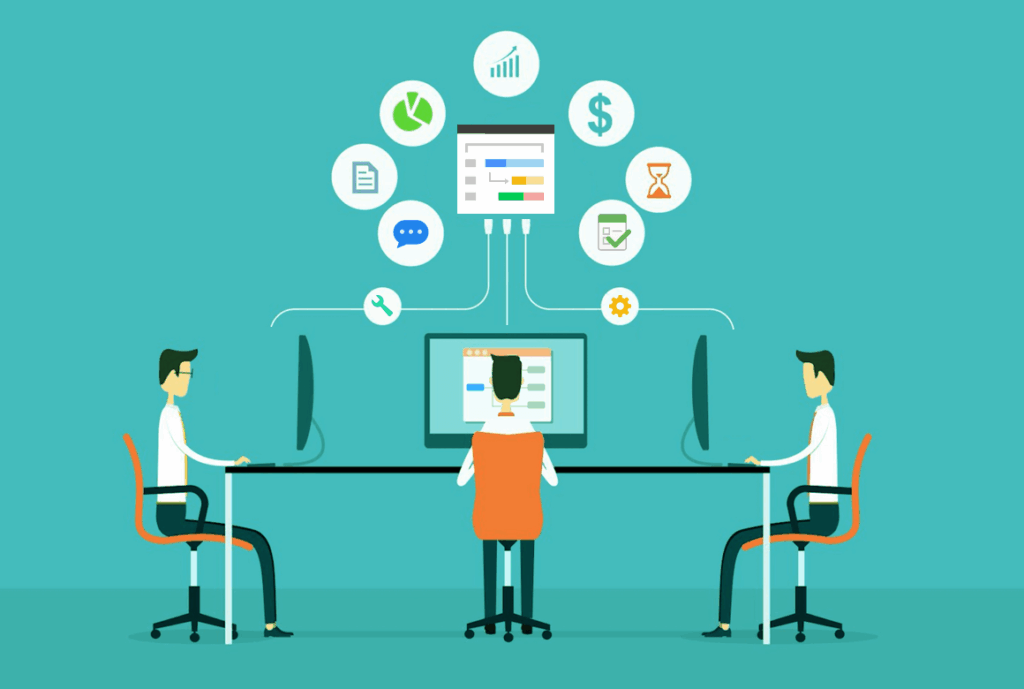
At its simplest level, CRM software stores customer names, contact details, and past purchases. However, modern systems do much more than that. They track emails, phone calls, and social media interactions automatically. Furthermore, these tools generate reports about customer behavior and sales patterns. Consequently, managers can spot trends and make informed decisions. Another key function is task automation. For instance, the system can send follow-up emails or remind salespeople about pending deals. Additionally, CRM platforms integrate with other business software like accounting or marketing tools. This creates a smooth flow of information across departments. Without such integration, data often gets lost or duplicated. Thus, a CRM acts as the central nervous system of customer operations.
How Data Organization Improves Daily Work
Imagine having all customer information scattered across spreadsheets, emails, and notebooks. That situation creates confusion and wasted time. In contrast, a CRM arranges everything in a logical order. Each customer profile shows their history, preferences, and open issues. As a result, employees can quickly answer questions without searching multiple places. Moreover, the software flags important dates like contract renewals or service anniversaries. This proactive approach strengthens relationships significantly. Meanwhile, sales representatives see which leads are most promising. They can prioritize their efforts accordingly. Therefore, daily work becomes more productive and less stressful. Employees feel empowered rather than overwhelmed. Ultimately, organized data leads to happier customers and better business results.
Key Benefits of Implementing CRM Management Softwares
Enhanced Customer Satisfaction and Retention
One major benefit of CRM software is improved customer satisfaction. When clients feel understood and valued, they stay loyal for longer. Specifically, the system records every complaint, request, or compliment. Support teams then access this history instantly during future calls. For example, a returning customer does not need to repeat their problem. The agent already knows the background. This saves time and reduces frustration. Furthermore, CRM tools can send personalized offers based on past purchases. Customers appreciate when a business remembers their preferences. Consequently, retention rates increase, and word-of-mouth referrals grow. According to a study by Salesforce (2022), companies using CRM see a 27% higher customer retention rate. Hence, the software directly impacts long-term profitability. Additionally, automated satisfaction surveys help businesses identify unhappy clients early. They can then resolve issues before losing the customer altogether.
Increased Sales and Revenue Growth
Another crucial advantage relates directly to revenue. CRM software helps sales teams close more deals in less time. How does this happen? First, the system scores leads based on their likelihood to buy. Salespeople then focus on high-value opportunities. Second, automated follow-ups ensure no prospect falls through the cracks. Studies show that 50% of sales go to the first responder (HubSpot, 2021). CRM alerts enable quick replies. Third, detailed analytics reveal which marketing campaigns work best. Managers can allocate budgets more wisely. Moreover, cross-selling and upselling become easier. The software suggests complementary products based on purchase history. For instance, a customer buying a laptop might see offers for a bag or antivirus software. This strategy increases average order value. In addition, forecasting tools predict future sales accurately. Businesses can plan inventory and staffing accordingly. Therefore, CRM directly boosts both top-line revenue and bottom-line profits.
Streamlined Team Collaboration and Communication
Poor internal communication often harms customer relationships. Different departments might give conflicting information. A CRM solves this problem by creating a single source of truth. Marketing uploads campaign results, sales adds lead notes, and support logs service tickets. Everyone sees the same updated data. Consequently, handoffs between teams happen smoothly. For example, when a salesperson closes a deal, the implementation team immediately knows the requirements. No one needs to send separate emails or hold unnecessary meetings. Furthermore, activity dashboards show what colleagues are working on. This transparency reduces duplicate efforts. Team members can also leave internal comments on customer profiles. These notes provide context without cluttering external communications. As a result, employees spend less time coordinating and more time serving customers. Collaboration tools within CRM platforms include shared calendars, task assignments, and file storage. Thus, remote and hybrid teams stay connected effortlessly.
CRM management Softwares
Why CRM management Softwares Is Crucial for Modern Businesses
Adapting to Changing Customer Expectations
Customer behavior has changed dramatically in recent years. People now expect instant responses and personalized service. Without a CRM, meeting these expectations becomes nearly impossible. Modern consumers interact with brands through many channels—email, chat, social media, phone, and in person. A good CRM unifies all these touchpoints. Therefore, whether a customer tweets a complaint or calls the helpline, the same information appears. This consistency builds trust and credibility. Moreover, customers dislike repeating themselves. Using a CRM prevents that frustration entirely. Another important factor is speed. When a lead fills out a web form, the system can immediately assign it to a salesperson. Automated workflows trigger welcome emails or appointment scheduling. Businesses that respond within five minutes are nine times more likely to convert leads (InsideSales, 2020). Hence, CRM software provides a competitive advantage in today’s fast-paced market. Without it, companies risk falling behind more agile rivals.
Data-Driven Decision Making and Reporting
Gut feelings are no longer enough for business strategy. Modern managers need hard evidence. CRM software delivers detailed reports on almost every activity. For instance, you can see which products sell best in which regions. You can track how long each customer takes to make a purchase. You can measure employee performance by looking at response times and conversion rates. All this data helps leaders make smarter choices. Furthermore, customizable dashboards highlight key metrics at a glance. Instead of guessing, managers identify exactly what needs improvement. Predictive analytics within advanced CRM systems even forecast future trends. For example, the software might detect that customers who buy item A often return for item B within three months. The business can then create targeted promotions. Additionally, sales pipeline reports show which stages lose the most deals. Fixing those bottlenecks increases overall efficiency. Consequently, CRM transforms raw data into actionable insights. This capability separates thriving businesses from struggling ones.
Conclusion and Final Thoughts
To summarize, CRM management software is an indispensable tool for any customer-focused organization. It centralizes data, automates tasks, and enhances collaboration across teams. The benefits include higher customer satisfaction, increased sales, and smarter decision making. Furthermore, modern businesses cannot ignore the importance of adapting to rising expectations. Without a CRM, companies waste time, lose opportunities, and damage relationships. Conversely, implementing the right system creates a foundation for sustainable growth. Remember to choose software that fits your specific needs. Consider factors like budget, team size, and required features. Training employees properly ensures maximum return on investment. Finally, treat CRM adoption as an ongoing process, not a one-time project. Regular updates and clean data keep the system effective. As technology evolves, so will these powerful platforms. Therefore, start exploring CRM options today. Your customers—and your bottom line—will thank you.
References
HubSpot. (2021). The ultimate sales statistics report. Boston: HubSpot Publishing.
InsideSales. (2020). Lead response management study. Provo: InsideSales Labs.
Salesforce. (2022). State of the connected customer report (4th ed.). San Francisco: Salesforce Research.
Smith, J. (2019). Customer relationship management in the digital age. London: Business Press.
Williams, R. and Chen, L. (2021). ‘The impact of CRM on small business performance’, Journal of Business Technology, 14(3), pp. 45-62.
#Unlocking #Business #Growth #Comprehensive #Guide #CRM #Management #Software #Choosing #Platform
Related: * **Freshsales (by Freshworks):** (AI-powered features, user-friendly, good for growing businesses) – Good for businesses looking for AI-powered features at a competitive price., * **Pipedrive:** (Sales-focused, simple to use, good for smaller sales teams) – A streamlined CRM designed specifically for sales teams., * **Task Management:** Scheduling tasks and setting reminders